After a very happy few years sharing my son’s flat in Woodstock, Cape Town, my son Donovan appeared in my bedroom door. This was early June 2019.
“So. I have a job in Montreal, Canada.”
It was not unexpected. He had been job hunting—everyone wants to improve their circumstances, and he needed to. It was not that he wasn’t happy doing what he did. At the time, he was teaching animation at a private college in the Cape Town city bowl.
I had thought that SA, once we reached rainbow nationhood, would implement all sorts of improvements, like free education and free medical care. I thought, too, that SA would immediately set about improving the pay and conditions of teachers in schools, colleges, and universities. They didn’t. They set us off on the wrong foot entirely by spending a huge amount of money on arms. We didn’t even have enemies. That money could and should have gone to education. Everybody in SA knows this shame, and it could very well culminate in the ANC kissing government goodbye in the 2024 General Election. They may hang on for 2024, but I doubt we will see them after the election after that. They have underperformed overall, and people will wait only so long.
Donovan struggled to get by on what he was being paid, despite being an expert in animation, for close to a decade. Anyone knows that is just wrong. How can one be a lecturer and struggle to meet basic expenses? Salaries for that sort of work are supposed to be better—partly to pay back all the money spent on higher education, and especially because animation is part of the movie business, which is usually better paid than most fields. So, since salary was his only bone of contention, Donovan was more or less forced to look for a better-paying job elsewhere. It so happened that one of his fellow lecturers got a contract job in Canada and alerted Don to an opportunity. And here it was.
“When will you leave for Canada?”
“Due to start work on 25 July, in Montreal.”
I was so happy for him. We both knew that he’d be fine for money in Canada, and that he would be happy there. My brother lived very happily in Ottawa until his death a year prior to Donovan getting the Montreal job. I had visited Canada as a performer in the early 90s when we played the Montreal Jazz Festival, and spent happy summer visits there twice before Al passed. Al’s birthday was 20 July, so visiting for his birthday meant lovely weather, trips to their cabin on the lake, and many happy hours walking around Ottawa.
Hanglip Farm
When I had visited Maeder Osler on holiday in 2019, we discussed me moving to the farm. My son had been job-hunting for more than a year. The college at which he lectured was since gone belly-up, along with the entire SEC listed company it was a sorry part of. Donovan was the least surprised of any person to hear that, given the way the place was run.
With my son leaving Cape Town, there was short period of self-reflection, wherein I faced the outcome of my life-choices. I had found it difficult to make and keep friends my whole life, partly because of trust issues from a twisted adult encounter, but also because, back then, dissing apartheid was not the way to win friends and influence people, and I went far worse than just dissing apartheid. Many people asked me “why do you play for black bands?”. I don’t know where they got their mindset from, but it may have been just their stark ignorance on how things work: I don’t, and people don’t, book themselves to play in bands, unless they are the bandleader. Band leaders hire poeple.I played for bands that hired me. That was it.
Whenever I explained it as simply as that, there was the characteristic catatonic silence in response. People somehow thought there should be ‘another way’. Well, there wasn’t. I said ‘yes’ to people who hired me. It was binary: the answer could have been ‘yes’ or ’no’, I just happened to answer ‘yes’. Whenever I explained, faces would be locked with an unspoken but they are black. Well, yes. Whites are a minority in South Africa, have always been so. Why on earth would I make so poor a commercial decision as to play for a band with limited opportunity for sales. Even with this kind of ovious ‘market’ argument, faces would clam up into an obdurate expression that shouted ‘but they are black’ louder than any passing freight train.
During the visit to Maeder’s farm earlier in 2019, the decision I formed quietly in my mind to get onto the farm was due to a single, very feelingly uttered sentence, breathed almost under his breath on the journey to de Aar, where Maeder was driving me to take the train back to Cape Town. That very urgent sentence was:
“I need an ally”.
As I mentioned earlier, that is a sentence i found irresistible. I took it very seriously, and in time, although things developed randomly along the way, that need of an ally was something I saw as a natural consequence of being “a good number two”. I am no leader, but like very much to busy myself, out of the way, fixing, organising, inventing, solving, whatever the context demands. I had done that with my sister Colleen in Johannesburg, and during my time in Johannesburg, Maeder had become the goto guy when I was starved of the Karoo. He had started the Toverberg Indaba, a tri-lingual newspaper, a paper that I helped type-set once or twice in those short trips to recharge my Karoo batteries.
There was one thing I had never forgotten about Maeder: he was proactive. Like most South Africans, he is very much a “can do” guy, and he and his partner Lesley were adept at assembling cohorts of like minded people with similar aims. Hanglip was as much of a storied fulcrum of important visitors as 20 Hopkins St had been in Johannesburg. I could sense that there was a thing or things that he wanted to chip away at or bring about in his Colesberg life, and I was keen to lend a hand. The thing is, the “thing” was as yet unborn, but both he and I have never let that daunt us much. Something would come along.
It did, and it was largely a product of what we jokingly called “WiWi”, short for “Wild Ideas”. Making it sound more like WiFi was part of the fun, because a lot of what came about was enabled purely because Maeder had the foresight, before this was even much of a thing in Colesberg or on a farm, to get WiFi on the farm.
Today, he successor on the farm, Rodney Naude, due partly to improved cell coverage in the area, and along with his workers, “farms by phone”, using social media messaging.
COVID on the farm
I saw many months of the pandemic out in a cabin previously occupied by young Vuyo Mkontwana, an agricultural college intern who spent his internship on the farm. I was comfortable enough there, though it was close to the river, so very cold. One morning, I found the longest (25cm) icicles I have ever seen, hanging from the zinc roof. On starting the car that morning, the temperature gauge on the instrument panel read minus 14 degrees celsius!
The most isolated period in the pandemic was spent in that cabin. Memorably, I saw not a single soul in ten days. An accomplished loner, I did not mind, and set my mind to learning HTML, CSS and Javascript during isolation. Later, it turned out that staff and their families had been told that I had COVID and they were warned away from even approaching me to avoid infection. I am not a person who catches any kind of flu easily1, but just for in case as we say in the Karoo, I had a box full of freshly harvested wilde als (artemisia afra), and drank a few mugs of tea brewed from the leaves. In four subsequent tests for COVID, spanning a couple of years later in Johannesburg, I tested negative every time.
In that time, both Maeder and Lesley contracted it, and both drove to hospital in Bloemfontein on medical advice. Lesley recovered after a week or so, but Maeder lay in poor condition for nearly three weeks. Toward the end of their time in hospital, with news of others in the area succumbing to COVID, I was faced with the prospect of surviving the owner and his wife. It was a chilling thought.
It was a hectically introspective time, during which I scolded myself over and over for being a loner (which, by the way, also has a lot to do with being quite deaf),
Very luckily for me Maeder and Lesley both recovered, and, in time, they made a comfortable home for me in one of Hanglip’s staff cottages. In time, Maeder provided a dish, erected on top of a 20m high and 50mm diameter pipe secured to the north wall of the house. Jon Theron, a network specialist by training, drove over & mounted this antenna at pole top, with a SIM in it, pointed toward Colesberg. We knew exactly the bearing, because Colesberg’s lighting glowed on the horizon at night. Voila! I had internet, a nice speedy 35Mbps. As Jon said:
Not bad for out in the sticks!
Connectivity in the area must have improved since I was there, because the new owner’s workers happily “farm by phone”. At the time I left there, cell reception was faint and spotty at best, though that could have been device-dependent: Jonty Driver sat happily chatting on his iPhone from the Groothuis stoep, while our lesser Samsungs pickep nothing. You get what you pay for!
After living very happily for some months, something weird began to overtake me in the winter months of 2021. By August, it was clear to my daughter Shashi that I was too ill to live far away from medical care in the Karoo, and she swung into action.
As one does, I put it down to old age: I was by then seventy-six years old, and I figured my time had probably come. I got weaker by the day. Gareth and Shashi drove down from Johannesburg, loaded up my personal effects, and we drove in convoy (I still had the use of my son’s Renault Sandero Stepway) to their house in Victory Park, Randburg.
Leaving Colesberg
I returned to Johannesburg after living on the farm of my friend Maeder Osler for two years because illness struck, and Colesberg, despite having a hospital, is effectively inadequate when it comes to serious medical help. When I left, the sole, elderly dorp doctor wanted to retire (he was well past normal retirement age), was trying attract a buyer for his practice—which included a wonderful old Colesberg house containing his rooms.
Maeder, on whose farm I lived in the area, told me recently that the practice was indeed sold, that there is at least one doctor in Colesberg again. There has not always been one at the local hospital. I was an outpatient there one afternoon. The issues I suffered from around then were serious enough that my daughter wanted me off the farm and near her in Johannesburg.
Manne Dipico hospital itself, on the outskirts of Colesber, on the Norvalspont road, and next to Riemvasmaak township, is a new-looking and imposing looking building. It was not able to attract a doctor during both the years I lived in Colesberg. Confronted by anything more serious than a cold or a flesh wound, simply puts one in an ambulance for Kimberley. Problem solved! Well, that does not suit everyone. Most Colesberg people simply make the two-hour-plus trip to Bloemfontein for what they feel to be adequate medical care.
Norvalspont
In the only poem ever written by my brother, Al Cook, Swansong of the 15F he wrote of “huge ghosts of pain” while crossing the Orange River at Norvalspont. Crossing the Orange in the dark, predawn hours seldom woke me as a toddler, but in later life, the din from clanging girders and banging steel was like an army of Bhuddist gongs, enough to startle from even the most content of sleeps on those trains. It still was a happy event - it meant we were now at last in the Cape Province, having crossed the Orange Free State all day long the day before.
I never take a bridge for granted. At every crossing, on any bridge anywhere, there is a fear of ending up in swirling water, as the worst “collapsing bridge” nightmare unfolds. It has never happened, but I truly went down all the way into the depths with Jason Bourne’s girlfriend in that bridge scene filmed in Goa 2. Nor could I forget the bellowing of cattle as our steam locomotive ploughed into them on the Pongola River bridge in my railway days.
On a tour to France, our first concert was to be in Lille. We were collected at Chartes de Gaulle and driven northward from Paris to Lille. I fell asleep, my head resting on the seat in front of me, but in time I woke from a nightmare of agonised shouts, screams and explosions, and enormous grief. We were crossing a river. Fighting through my terrible sadness, I craned my head and looked back to see the name of the river we had just crossed. It was the Somme. I had no idea we were going to cross it that morning, so I also have no idea how the tragic war nightmares took me. The fact is that “Uncle” Albion Corrie met his end in that area, and there was something in the very air, water and soil that ripped into my dreams. We carry things through generations in some mysterious way.
And that is ‘bridges’ for me: “Huge ghosts of pain”.
From Bloemfontein at midnight
through flotsam-flung funereal gums
for the last time I depart.

The Orange River is riveted with stars; leaping girders zigzag
a dance of death over the moon.
At Norval's Pont I waken enormous ghosts of pain.

I stop at Dwaal and the universe stops with me;
in the dark soul of the night
you can hear the wind's mind wandering
at Dwaal.

I have a duty; I must witness a terrifying encounter;
I must be at a certain appointed place,
at a certain appointed time,
when the Karoo
beauty for beauty
outmatches the dawn.

On the end of the station platform at Rosmead
sits a blind black man with a guitar,
"Miesies got a baby,
Baby's name is Abie,

Abie, da baby,
Abie, da baby boy.”

the voice quavers with the horizon
above the muffled laughter as apple cores and peach pips
are thrown into his hat
or at him.

With set jaw the silence
takes their names.
Delicate titillation of rubber, an Alfa-Romeo on the N7.
Handsome TJ off to see a bored suburban debutante in PE.
It quickly passes me;
lounge-lizard beating Hercules
at Rummy.
I feed on flames and the aching arms and sweat of men
I hump the agony of steel.

My huge flat ears and gait
short from the knees down
are like those of the African elephant
untameable.

Ah, but never more will my proud searchlight rear at the stars
before dipping down that slow slope to Hanover Road.
Quietly I would go: quieter than the hiss of the lamp over
the milkcans, and the softly sobbing child.
Gently: gentler than the stationmaster's voice: "Toemaar,
boetie,
Toemaar, ouboet.”

And then I would join that heart with the drumboogie of
mine
and my wild wail in the night.

How now will children sleep again
on the line from Hanover Road?
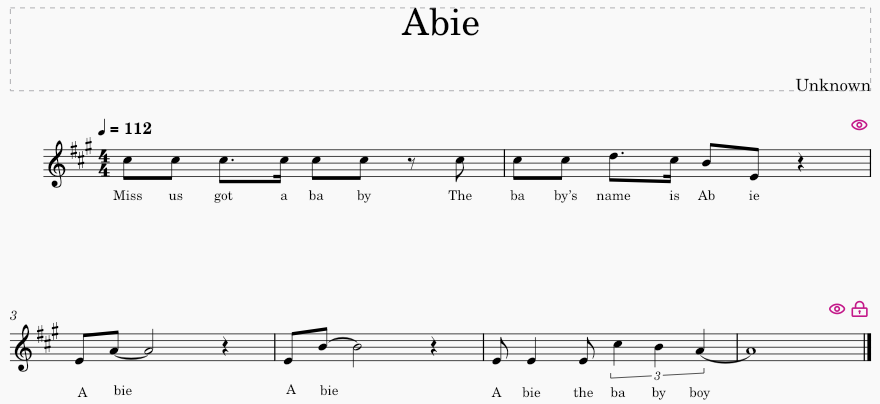
Brother Allen used a song of a minstrel on the platform of an Orange Free State station named Marseilles. We wish we knew whose song it was. Both my sister Irene and I can still sing it, just as we heard it from that station platform entertainer, seventy-five years ago.